Trust and Customer Contract
Can Tesla preserve buyer and regulator trust as its speed, autonomy claims, software packaging, customer-impact decisions, and politicized public meaning test the customer contract?

Can Tesla preserve buyer and regulator trust as its speed, autonomy claims, software packaging, customer-impact decisions, and politicized public meaning test the customer contract?
Tesla still appears to retain a tolerance premium, but the surplus looks thinner and more conditional than in the Model S and Model 3/Y breakthrough eras. The evidence points in both directions: recent registration and sales data suggest buyers can still return when the product/value equation works, while brand-consideration data, protest activity, and the Yale/NBER “Musk partisan effect” study indicate that politicized public meaning has created real residual drag. The current read is not that trust has collapsed, but that Tesla’s special permission is now more dependent on present-tense product strength, pricing, charging, and autonomy progress than on broad goodwill or belief in the mission.
If trust holds: Tesla keeps its unique permission from buyers and regulators: faster product cycles, software-led changes, autonomy ambition, unconventional distribution and service, and a more polarizing public identity remain acceptable because the product, charging network, price/value equation, and platform promise still feel meaningfully ahead. The customer contract stays elastic: buyers continue to tolerate friction because Tesla continues to deliver enough future-facing advantage.
If trust breaks: Tesla loses goodwill. Autonomy claims feel overextended, software and packaging decisions feel extractive, customer friction weighs more heavily, and politicized brand meaning adds to the drag. Tesla can still sell cars on product, price, charging, and technology, but loses the implied permission that once let it move fast and define the future on its own terms.
Throughline: this is about whether Tesla can preserve the unusually high-trust customer contract that made buyers accept risk, change, inconvenience, and unfinished promises as part of the bargain—or whether Tesla becomes a more normal automaker, judged less by belief in the future and more by present-tense execution and public perception.
Why the iX3 charges at half the rate of a car carrying the same battery. The Xpeng X9 holds within a kilowatt-hour of the iX3's usable pack and moves it from 10 to 80 percent in 13 minutes against BMW's 23. Both run 800V, so the architecture doesn't explain it. A capability ceiling, a deliberate taper, or two cars at opposite ends of one cell-level tradeoff — R&R can't yet separate them.
Resolves on: the iX3's measured charge curve, the X9's cell chemistry, and both cars' battery warranty terms — where a deliberate taper would have to show up commercially, or it isn't a strategy.
Open since Jun 2026
Second Watch List Item. Some text.
More text.
Open since Jul 2026
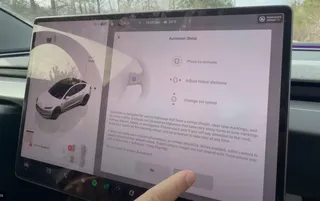
Frustrated customers are a strategy cost

Monthly data on new vehicles at the county level show how Musk's actions have impacted sales
Earlier failed or delayed promises haven’t hurt Tesla—this miss involves hardware, making it worth watching